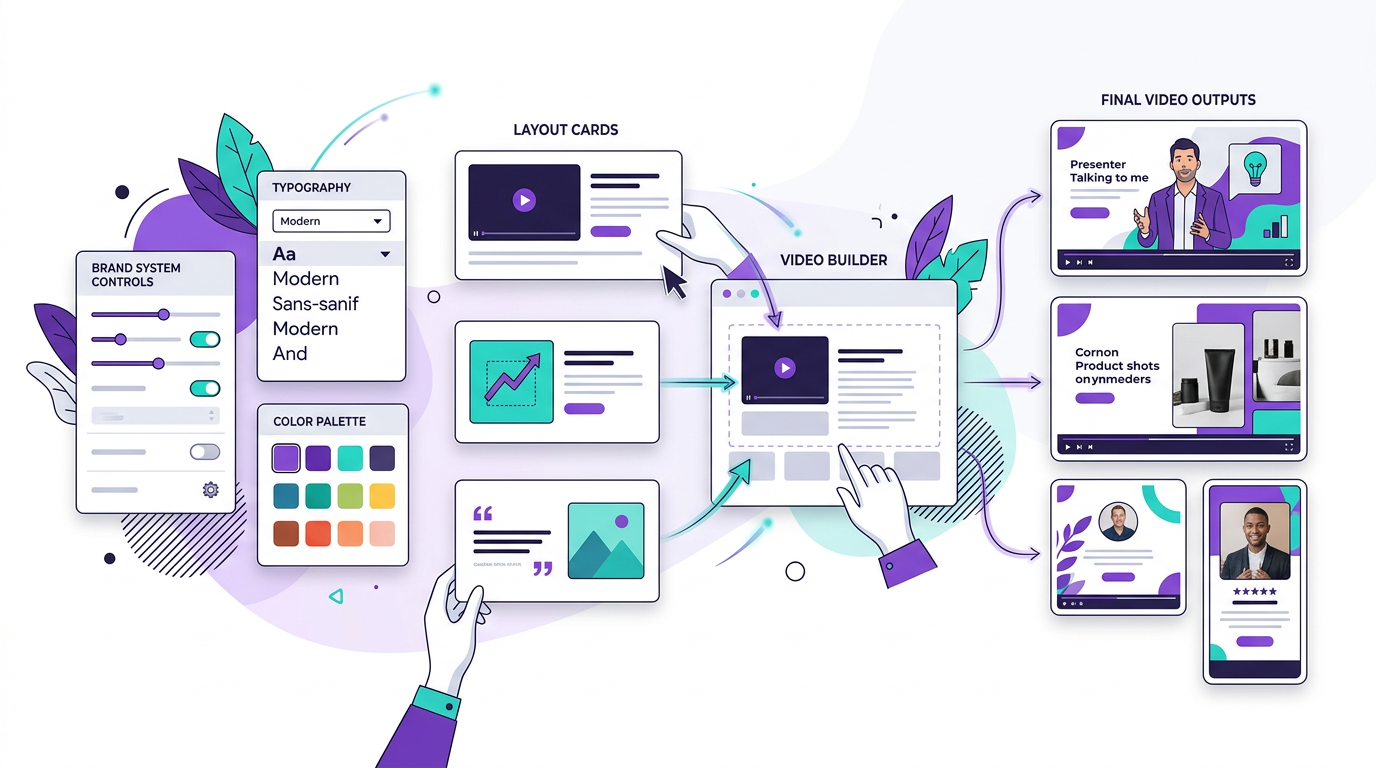
Video editor workflow
Video editors should not rebuild the same brand system every time a new project lands
The fastest branded workflow is not starting from a blank timeline. It is generating a reusable template from the client's actual visual identity, then applying it across every future video.
Blank-template work is where the time disappears
Most branded video work starts with the same slow setup: collect the client's site, pull out hex values, guess the right font pairings, rebuild lower-thirds, then keep re-checking whether the result actually feels on-brand. That setup tax repeats even when the videos themselves are structurally similar.
For editors working across multiple client accounts, this is rarely the best use of time. The value is in shaping the story, pacing, and final output, not manually rebuilding brand scaffolding that could have been generated in minutes.
Instant branded templates change the workflow
A strong branded-template workflow starts from source identity instead of manual recreation. If the system can read a website, extract the colors, typography, and layout cues, then build a reusable starter template automatically, the editor begins from something close to the finish line.
That makes the template a reusable asset rather than a one-project setup. The first project gets faster. Every project after that gets dramatically easier because the style layer is already defined.
- Client colors and typography are pulled from the source instead of typed in by hand.
- Editors spend more time on scenes and story, less on repetitive setup.
- A reusable template makes recurring client work materially faster.
- Brand consistency survives even when multiple people touch the same account.
What editors actually need the template to control
A useful branded template should carry the pieces viewers notice repeatedly: title hierarchy, background treatment, card styling, logo placement, CTA structure, and motion feel. If those defaults are stable, an editor can focus on adapting the content rather than arguing with design settings every time.
This is especially useful for agencies, freelancers, and in-house editors supporting multiple channels. The same brand language can power YouTube explainers, product updates, embedded article videos, and short-form derivatives without starting over from zero.
How Blog2Video helps video editors move faster
1. Paste the client's website URL and let Blog2Video extract colors, fonts, and visual cues into a branded starter template.
2. Review the generated template in Template Studio and make any final adjustments for logo, motion, or layout preferences.
3. Reuse that template across future blog-to-video projects so branded output stays consistent without repeated setup work.
Frequently Asked Questions
Do video editors still need to adjust the generated template?
Sometimes, yes. The instant template gets you close by extracting the brand system automatically, and then the editor can refine small details like logo handling, exact typography, or motion style.
Is this useful for freelancers and agencies?
Yes. It is especially valuable when you manage multiple brands because each client can have a reusable template instead of a new manual setup process.
Can one branded template support multiple video formats?
Yes. A good template system keeps the brand stable while supporting different scene types, content structures, and export destinations.
Why is instant template generation better than manual setup?
Because it removes repeated production overhead. Editors can spend their time improving content and delivery instead of reconstructing the same brand system project after project.