Thought leadership
Programmatic video generation is about structure, not just speed
The strongest AI-assisted video systems are the ones that translate existing content into repeatable, structured outputs.
Programmatic does not mean generic
When the source content is strong, programmatic generation can produce more consistent, scalable output than manual one-off editing. The misconception is that automation automatically lowers quality when, in reality, structured systems often protect quality better than improvised production.
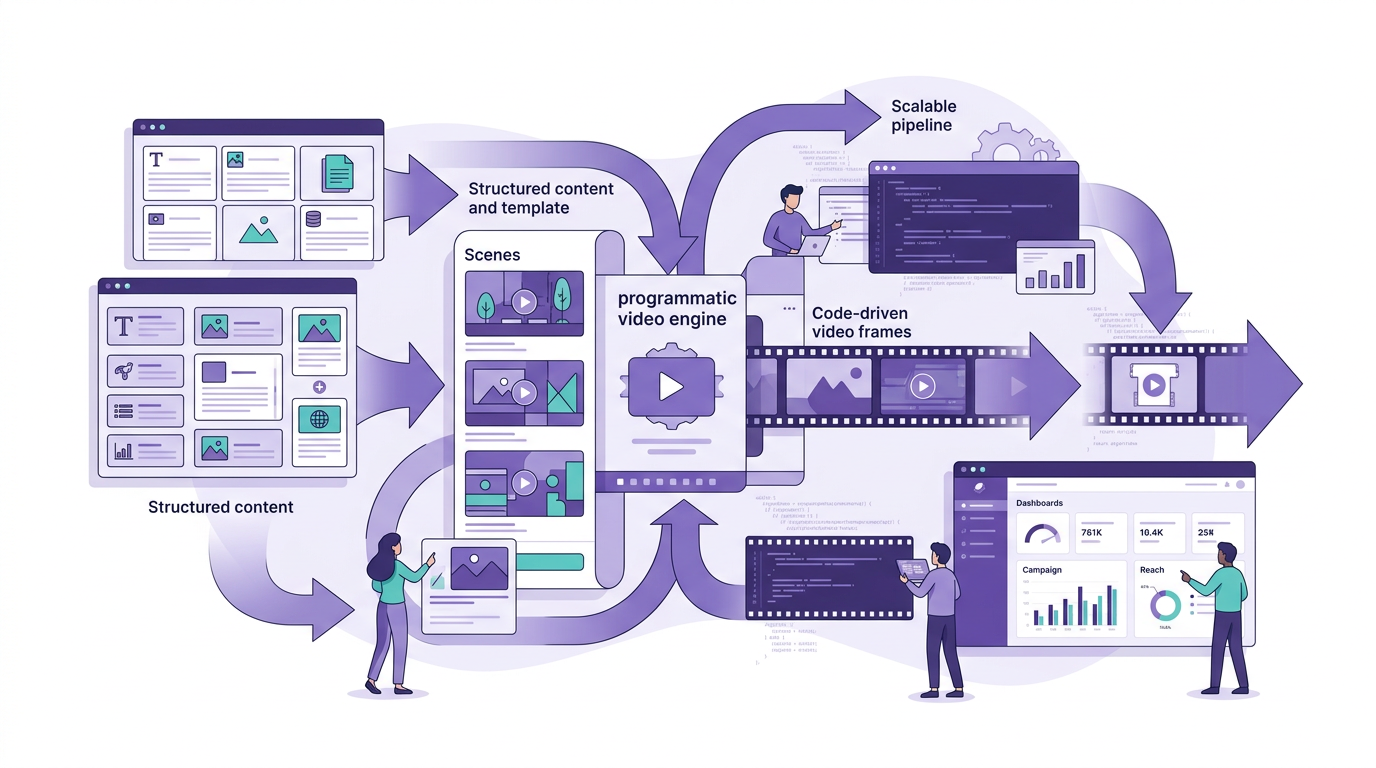
Programmatic video should be understood as a publishing architecture. It uses templates, scenes, and rules to make good content repeatable, not interchangeable.
The right constraint improves quality
Templates, layout systems, and structured scenes are not limitations. They are what make the output reusable and trustworthy. Constraint helps teams scale because it reduces decision fatigue and keeps the viewer experience coherent across many videos.
This matters even more for marketing teams with content libraries, multiple contributors, and recurring campaigns. Without structure, video becomes hard to scale responsibly.
- Use repeatable scene types for intros, comparisons, quotes, and CTAs.
- Define brand-safe layouts before volume increases.
- Treat content structure as an input, not something to rediscover each time.
Content-first generation beats prompt-first novelty
Prompt-only video generation is good at producing isolated moments. It is weaker at translating a proven article, document set, or campaign library into consistent publishing output. Content marketers usually need the second problem solved more than the first.
That is why programmatic generation matters. It aligns the video workflow with how content teams already operate: briefs, assets, templates, and measurable distribution goals.
Use structure to scale quality
The real opportunity is not making one flashy demo. It is creating a system that can turn a publishing archive into a video library without quality collapsing. That is the difference between experimentation and infrastructure.
When the structure is strong, each new article, newsletter, or documentation update becomes a candidate for efficient video production. That is where real leverage appears.
How Blog2Video handles this
1. Feed it any URL or document — Blog2Video programmatically extracts the content structure and builds scenes from it. No manual prompting required.
2. Apply a consistent template — Every video follows the same brand system, whether you process one post or a hundred. Templates enforce quality at scale.
3. Review and ship — The AI scene editor lets you adjust individual scenes without rebuilding the whole project. Programmatic meets editorial control.
Frequently Asked Questions
Who is this guide for around programmatic video generation?
It is designed for written-first creators and teams who already have source material and want a repeatable path into video rather than a prompt-only workflow.
Does this help with content-first video systems?
Yes. Each article is written to help you turn one content asset into multiple formats while keeping the original message intact.