Research communication
Use video to explain the paper without flattening the ideas
The best research explainers do not oversimplify the work. They create a cleaner path into it.
Preserve the structure of the paper
The introduction, method, key findings, and implications often provide a natural scene sequence for the explainer. Research papers already have a logic to them, and that logic is usually a better starting point than trying to invent a new narrative from nothing.
The goal is to reduce friction without damaging the argument. Viewers should leave with a reliable picture of what the paper asked, how it answered the question, and why the result matters.
Choose the audience before the script
A paper explained for peers will look different from a paper explained for a broader technical audience. That choice should shape the edit early, because the level of assumed knowledge determines how much context, jargon, and methodological detail you need to retain.
Audience selection also affects tone. A lab update, a founder explainer, and a public education video may all come from the same paper, but they are not the same asset.
- Define whether the target viewer is expert, adjacent, or generalist.
- Keep terminology precise, but explain why it matters when needed.
- Show the result visually before diving into technical detail.
Use visuals to reduce entry friction
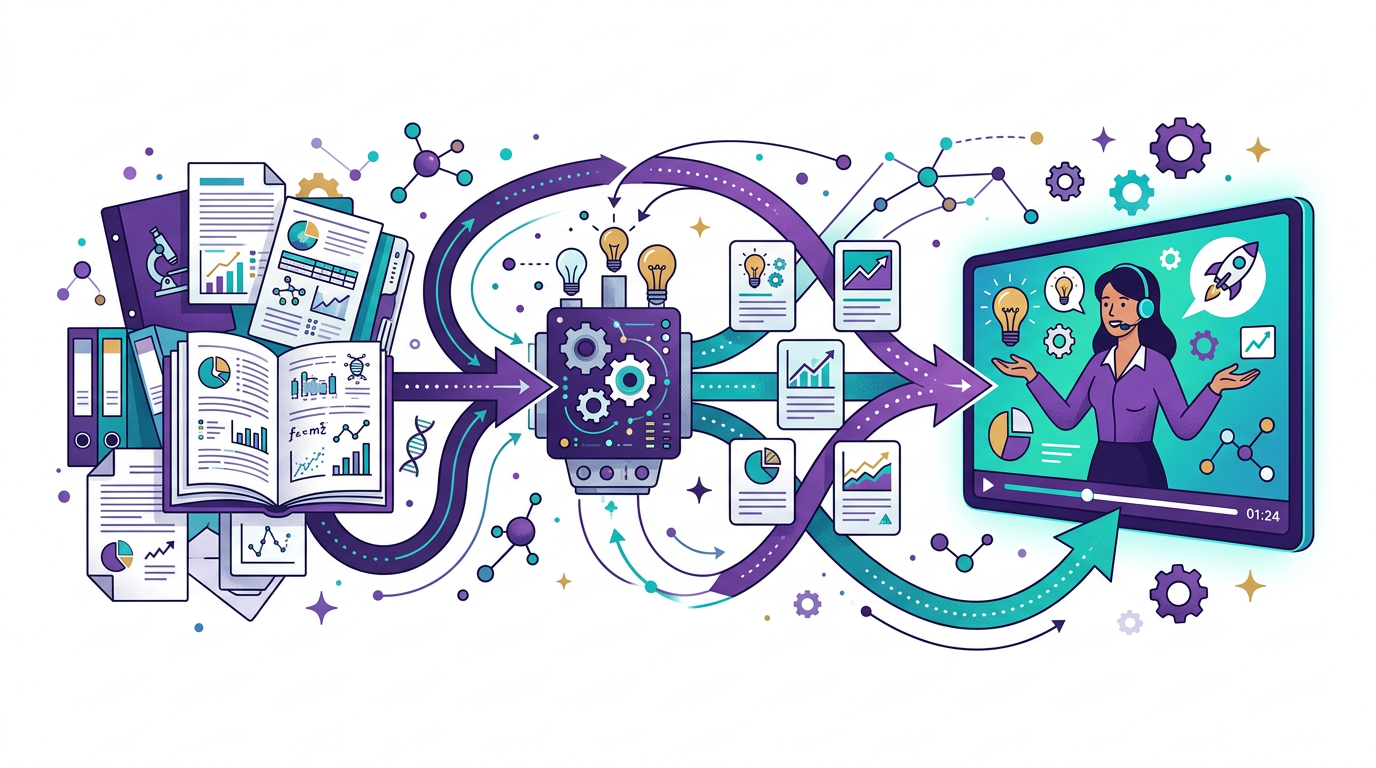
The point is not to replace reading. It is to make the core ideas easier to approach and remember. Charts, diagrams, simplified scene layouts, and narrated transitions can help the viewer understand why the paper deserves attention.
This is where video can outperform the PDF for first contact. It can orient the viewer around the big idea before they commit to reading tables, methods, and appendices in depth.
Respect the nuance while widening access
The best explainers widen access to the work without pretending the work is simpler than it is. That means acknowledging caveats, uncertainty, and scope rather than turning every paper into a clean breakthrough story.
When done well, the video becomes an invitation into the full paper. It creates interest, comprehension, and trust at the same time.
How Blog2Video handles this
1. Upload or paste the paper — Blog2Video reads the document structure, abstract, methodology, and findings into an organized scene outline.
2. Pick a clear template — Whiteboard preserves the explanatory tone research audiences expect, with space for diagrams and structured arguments.
3. Generate and distribute — Share the narrated explainer on YouTube, conference pages, or course portals to widen access beyond the PDF.
Frequently Asked Questions
Who is this guide for around research paper to video?
It is designed for written-first creators and teams who already have source material and want a repeatable path into video rather than a prompt-only workflow.
Does this help with research communication?
Yes. Each article is written to help you turn one content asset into multiple formats while keeping the original message intact.