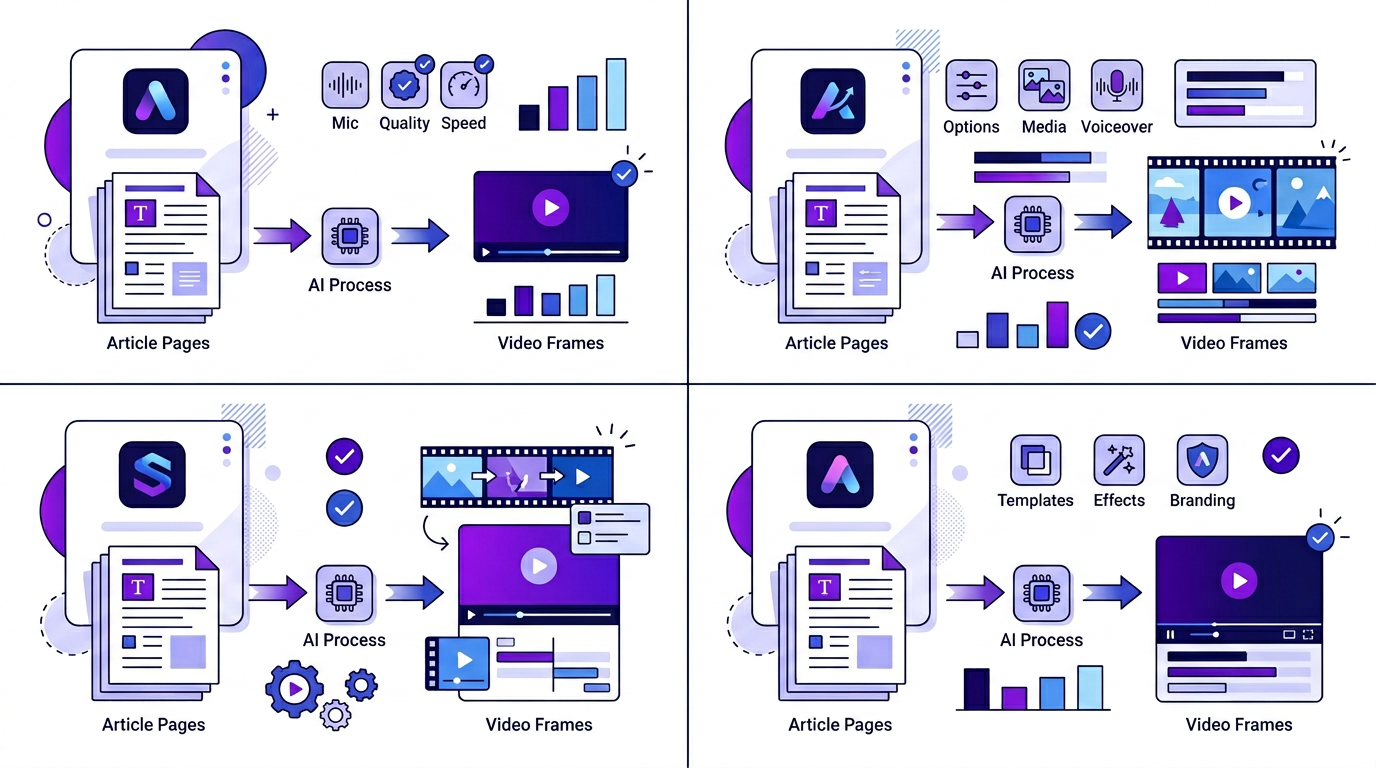
Blog2Video vs VEED
VEED is a flexible AI video editor. Blog2Video is a blog-to-video workflow.
Both tools can help you make videos from written content, but they optimize for different jobs. VEED is built around editing, repackaging, subtitles, avatars, and stock-based social production. Blog2Video is built to turn blog posts and articles into structured narrated videos with far less manual setup.
The core difference: editor-first vs blog-first
VEED is a broad online video editor with AI features layered into the editing workflow. Its blog-to-video, article-to-video, text-to-video, subtitle, and avatar tools all sit inside a larger platform designed for social video, marketing videos, and fast editing. That makes it useful when you want to generate a draft and then keep shaping it in an editor.
Blog2Video is narrower on purpose. It is designed around one flow: start with a real article, blog post, PDF, or document and convert that source into a structured video automatically. The article is treated as the source of truth, not just inspiration for a generic video draft.
- VEED: online editor with AI generation, avatars, subtitles, and stock-media workflows
- Blog2Video: content-first generator optimized for blog and article repurposing
- VEED: stronger when editing flexibility is the center of the workflow
- Blog2Video: stronger when the written source should define the final video structure
Where VEED is genuinely strong
VEED has real strengths. Its editing environment is accessible, it leans heavily into subtitle styling and social-ready output, and it supports workflows like editing with transcript text, using AI avatars, and generating prompt-based videos. For creators making talking-head clips, social snippets, promos, or caption-first videos, those are meaningful advantages.
Its Brand Kit and subtitle features also make sense for teams that live inside an editor and want quick access to logos, fonts, B-roll, and reusable styling choices. If your workflow already assumes you will spend time in an editor, VEED fits that expectation well.
- Automatic and stylized subtitles for social-native video
- Script and transcript-based editing
- AI avatars and prompt-first text-to-video options
- Brand Kit support for editor-driven teams
Where VEED becomes slower for blog-to-video work
The weakness appears when the main job is converting structured written content into a finished explainer video quickly. A blog post is not just a script blob. It has headings, examples, supporting points, code blocks, diagrams, and a specific argument flow. General editors tend to flatten that structure unless you manually rebuild it scene by scene.
That is the tradeoff. VEED gives you broad editing power, but the more your content depends on the original article structure, the more manual interpretation and cleanup you usually have to do after the initial generation step.
Why Blog2Video is the better fit for written-first creators
Blog2Video is optimized for the exact bottleneck that blog-first teams run into: taking a strong article and getting it into video without turning the job into a full editing project. The system extracts structure from the source content, maps it to scenes, adds narration, applies a template, and gives you a coherent first draft built from the actual writing.
That makes it especially strong for SEO content, technical tutorials, product explainers, educational posts, research communication, and any workflow where the writing already carries the value. Instead of asking you to reinterpret the article inside a general editor, Blog2Video keeps the article intact and turns it into a production workflow.
- URL-in workflow for published blog posts and articles
- Scene structure derived from headings and source organization
- Better fit for code, diagrams, bullets, and educational content
- Faster path from article to publishable narrated video
Which one should you choose?
Choose VEED if your main need is a flexible browser-based video editor with AI add-ons, especially for captions, avatars, promotional editing, and social repackaging. Choose Blog2Video if your problem starts earlier: you already have strong written content and want the fastest possible path from that content to a finished branded explainer video.
The distinction matters because these tools save time in different places. VEED saves time inside editing. Blog2Video saves time before editing by turning the written source into a structured video automatically.
Frequently Asked Questions
Is VEED good for making AI videos?
Yes. VEED is strong for AI-assisted editing, subtitles, avatars, and prompt-based video creation. It is especially useful when your workflow still expects manual editing inside a browser-based editor.
Why would someone choose Blog2Video over VEED?
Because Blog2Video is more specialized. If your goal is to turn blog posts, articles, or structured documents into narrated videos quickly, the content-first workflow removes more manual work than a general editor usually can.
Which tool is better for bloggers?
For bloggers specifically, Blog2Video is usually the better fit because it starts from the article URL and preserves the structure of the post instead of requiring more manual scene rebuilding.
Can VEED and Blog2Video be used together?
Yes. Some teams could use Blog2Video to generate the first structured explainer draft and then use a general editor later for channel-specific edits. But if the main question is which tool gets a blog into video faster, Blog2Video is the more direct fit.